Boots, Bricks and Gunpowder: a 19th Century Waybill Book reflecting life in the Glyn Valley, Denbighshire
On the first day of Explore Your Archive week, we are highlighting the work that goes into the conservation of archives and manuscripts. At North East Wales Archives we have received a grant from the National Manuscripts Conservation Trust (NMCT) to enable the conservation of a unique volume in our collections: a Waybill Book from the Glyn Valley Tramway (1881-1883). The book relates to the tramway which was built in 1873, to connect slate quarries at Glyn Ceiriog with the Ellesmere Canal. It originated from Pontfaen Station on the south side of the River Ceiriog.
courtesy of https://picryl.com/media
Here, all traffic going up the Ceiriog Valley from Gledrid Wharf on the Ellesmere Canal and Preesgweene Railway Station was recorded and weighed before continuing its journey to Glyn Ceiriog. A waybill was completed for each load, and this book is a unique record of what late 19th-century residents of the Valley consumed from the outside world: from boots and bricks to gunpowder and quarrying tools. It is not known that any other books which must have existed during the tramway’s life (1873-1935) still survive. Indeed, waybill books in general are quite rare, so this is a very important document. The information contained within is of great interest to historians of the local area, of transport, industry or social conditions generally.
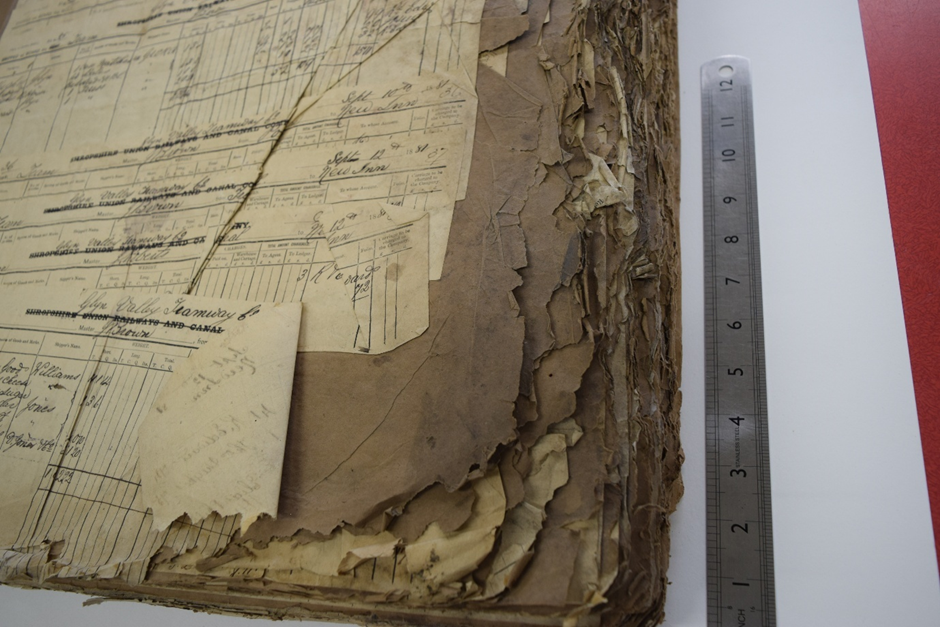
However, when the book was donated to the Archives it was in very poor condition and in substantial need of repair. It would be impossible for researchers to consult in its current fragile state.

The volume itself is large, containing over 150 pages, with the waybills pasted into it. The binding is in very poor condition and the cloth cover detached. The sewing is intact, but the boards are damaged and only just held together by the tapes. The pages have multiple tears and have been eaten by rodents, who love to munch on paper! The paper is in poor condition and is weak and fragile; there is evidence of mould damage and the book has been subjected to damp, with tide marks.

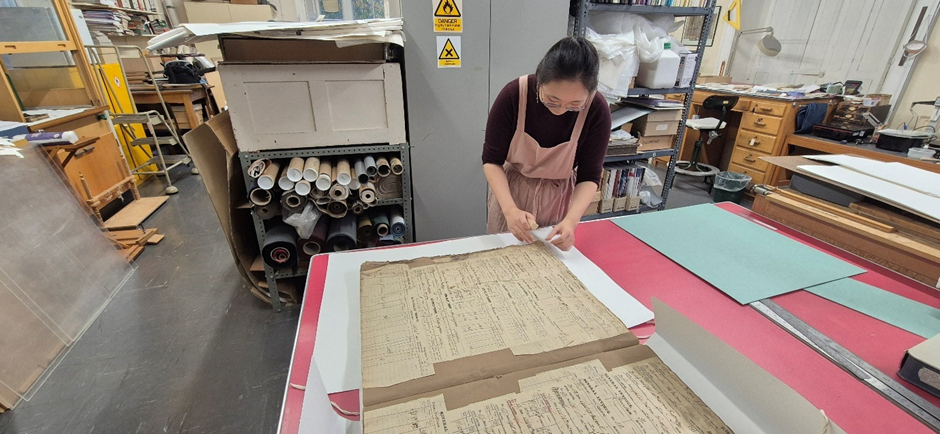
Because NEWA has only one Conservator working across two sites, it would not be possible to devote substantial time to this long and in-depth task, in addition to all the other documents in need of repair and preservation at the Hawarden and Ruthin branches. NEWA recently applied for a grant from the NMCT and were extremely pleased to receive enough funding to cover both the conservation materials and also a Project Conservator to work on the Waybill Book for a 6-month period. The successful candidate was Jiwon Jeong, a newly qualified conservator from the University of Cardiff.

Jiwon will be working at the Hawarden branch until April 2026 and her first task is to dismantle the volume, clean and repair the pages. The individual waybills will be repaired as required, especially those with damp and rodent damage.

As each page is removed from the book, it will be scanned by a small team of volunteers, who will be trained in document handling by our conservator and in scanning by our experienced staff. The digital copies will then be available in the search-room for customers to view, which will make the book much more accessible.
The volume’s binding will then be conserved, with repairs to the boards, and the cloth re-attached. The waybills will be returned into the volume by hinging, rather than pasting. When the repairs and restoration are complete, a bespoke phase box will be created to house the volume for greater protection.
This project is a fantastic opportunity for North East Wales Archives to make this unique and fascinating record of the Glyn Valley Tramway available to customers. It is also offering a prized opportunity for a newly-trained Conservator to gain very valuable skills. We are also happy to be able to provide sought-after opportunities for a team of volunteers to be trained in digitisation, handling of fragile original documents, working with unique archival material.
You can read more about the waybill book and it’s contents in the latest blog post: https://denbighshirearchives.wordpress.com
We will be keeping you updated with progress as the Project continues, so please check our social media for updates!