Transforming Collections Care at Gwent Archives: Project Complete!
We’ve previously reported on the ‘Transforming Collections Care at Gwent Archives’ project, funded by the Welsh Government Collections Management Capital Improvements Programme, and this is our final update.
It’s been an amazing, though busy, 6 months! The project started in November, with the confirmation that we had been successful in our application for c£80,000 of funding to create more efficient and effective spaces for working on our collections.
The first phase was for mobile shelving for the relocated ‘Isolation’ room. This is the room we keep items that need to be isolated from the rest of the collections, because of damp, mould, insect activity etc. Lots of work needed to take place on the collections to treat as many of them as possible, and our staff and volunteers rose to the challenge! By the end of the project the number of items requiring treatment had reduced by 65%. More information on this part of the project is in our November update https://archifau.vs.mythic-beasts.com/2025/02/05/transforming-collections-care-at-gwent-archives-an-update/.
Then we started working on the rooms! New conservation equipment was ordered, including a heavy-duty guillotine so we can make bespoke boxes to protect the collections, drying rack and a book binding tub. We also purchased height adjustable furniture, so that the spaces are accessible for both staff and volunteers, and lots (and lots!) of shelving.
In January new shelving was installed in the Conservation Store to better manage the equipment and materials.
The Conservation Store
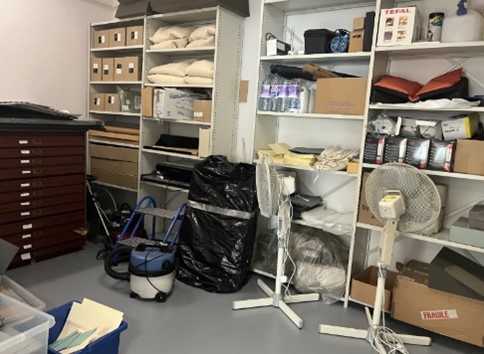
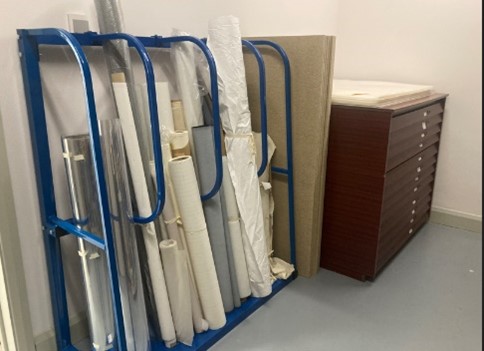
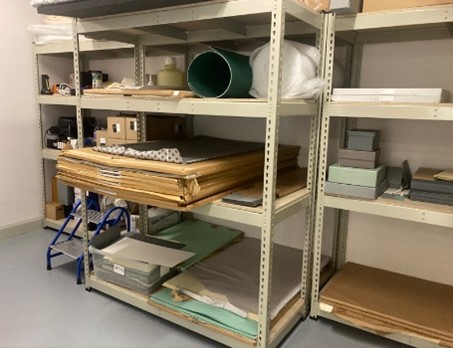
The new book binding tub was also installed, as was an existing chemical hood as space had been cleared to house it. The old Isolation room was cleared, ready for its new use as a digitisation room. The contents of this room were archives that required treatment before they could be allocated a permanent home in the Strong Rooms. The Collections Care team, other staff and the volunteers worked hard to treat as many of the items as possible. Those that required more interventive treatment were moved and housed in the new Isolation room.
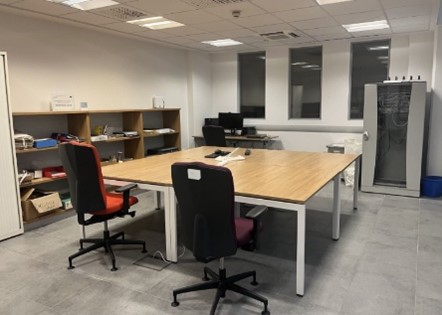
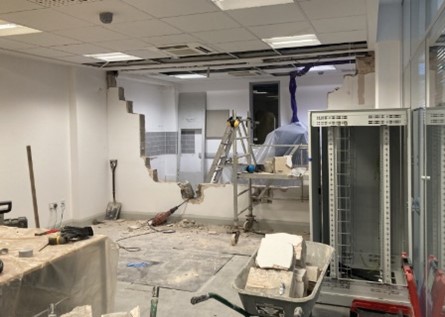
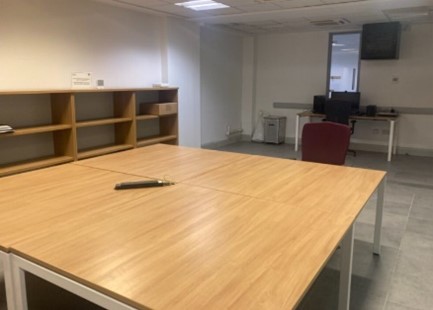
February saw the most obvious changes, with three rooms transformed. Two rooms became one larger Cataloguing Room, to include additional height-adjustable and increase space for cataloguing the collections. This work took just over a week and involved removing a wall, rerouting electrical and data points as well as moving the server cupboard. It was the noisiest and dustiest part, but definitely worth a short period of disruption.
The Workroom and Cleaning Room englarged to become The Cataloguing Room
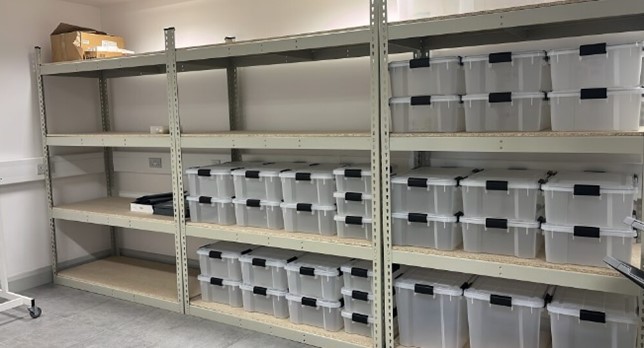
Alongside this, the old reprographics room was converted into an Archive Triage room. This room will be used to assess new collections for any dust, mould, damp, evidence of insect activity etc. If no treatment is required they will be repackaged in this room and allocated a permanent location in the Strong Rooms. If they require treatment they will be moved to the mobile shelving in the new Isolation Room. This task used to take place in the workroom, so the new space allows us to separate the potentially dirty function of collections assessment from the ‘clean’ cataloguing function for the first time. The Triage room now contains a large height-adjustable table for assessing collections, shelving to store packaging and materials for isolation and a cold storage unit for archives that require cold treatment.
The Reprographics Room became The Archive Triage Room
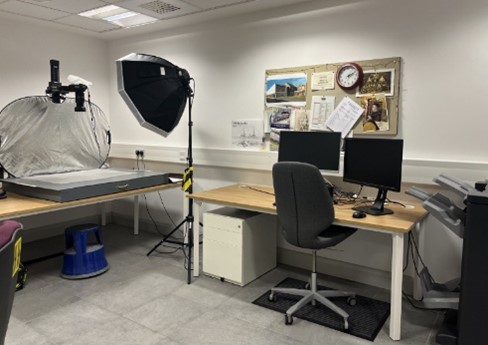
The final room commissioned was the old Isolation room. Cleared of its contents earlier in the project, the digitisation equipment and furniture moved in mid-February following the establishment of the Triage room.
The Isolation Room became The Digitisation Room
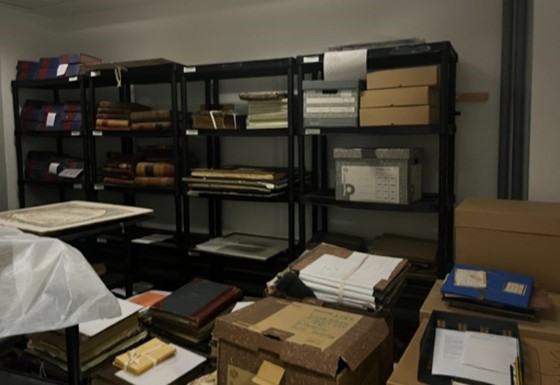
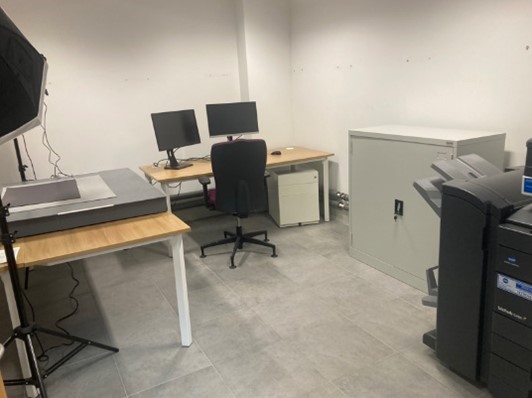
It’s been a busy, and messy, few months. But we’re delighted with our new rooms, equipment and furniture. A huge thank you to all the staff and volunteers, who worked so hard. And apologies to those who visited the week the wall was being removed – it was a lot noisier than anticipated!